In the battery manufacturing process, precision and accuracy play a pivotal role in ensuring the overall performance and efficiency of the final product. One of the critical processes where precision is paramount is battery electrode cutting. The cutting of battery electrodes using a cutting machine affects many aspects of a battery's performance, including energy efficiency, cycle life, and overall lifespan.
This article explores how cutting precision impacts battery performance and why the accuracy of battery electrode cutting machines is critical for producing high-quality energy storage solutions, such as lithium-ion batteries, supercapacitors, and fuel cells.
What is Battery Electrode Cutting?
Battery electrode cutting is a critical step in the production of batteries. The electrodes, which are typically made of thin sheets of materials such as aluminum (for the cathode) and copper (for the anode), must be cut to precise dimensions before they are assembled into battery cells. The cutting process ensures that the electrodes fit perfectly within the battery casing and are capable of maintaining efficient charge/discharge cycles.
The cutting of battery electrodes is done using specialized cutting machines. These machines are designed to ensure that the electrode material is cut to the required width, length, and shape without causing any damage to the material. Cutting is usually done using laser cutting, shearing, or rotary cutting methods, depending on the specific needs of the battery design.
Why Does Cutting Precision Matter in Battery Production?
The precision of the cutting process is critical to the performance of the final battery. Inconsistent or inaccurate cuts can result in several issues that affect the battery's efficiency, energy density, and lifespan. Below are the key reasons why cutting precision is crucial in the battery production process:
1. Ensures Uniform Energy Distribution
Batteries rely on a consistent energy flow during the charge and discharge cycles. If the electrodes are not cut uniformly, some areas of the battery may receive more or less charge than others, resulting in uneven energy distribution. This leads to:
Reduced energy density: The battery’s ability to store energy efficiently is compromised.
Uneven charging and discharging: Inconsistent electrode sizes can result in some parts of the battery being overworked, leading to poor performance.
Precision cutting ensures that each electrode fits perfectly into the battery, providing uniform energy storage and optimal performance.
2. Prevents Mechanical Stress on Electrodes
When battery electrodes are cut imprecisely, the material can experience mechanical stress. This can cause cracks, deformations, or poor bonding during the assembly process, all of which can lead to performance degradation over time. Additionally, mechanical stress can cause the electrodes to lose their structural integrity, leading to:
Reduced lifespan: Batteries with stressed or damaged electrodes will degrade faster and suffer from capacity fade.
Decreased efficiency: Areas of the electrodes that are damaged may lead to increased resistance, reducing the battery's overall efficiency.
By cutting the electrodes with high precision, manufacturers reduce the risk of mechanical stress, ensuring that the battery maintains its structural integrity over its lifespan.
3. Improves Battery Cycle Life
The cycle life of a battery refers to the number of charge and discharge cycles it can undergo before its capacity significantly decreases. High-precision electrode cutting is essential for prolonging a battery's cycle life, as it ensures:
Even wear across the entire surface area of the electrodes during charge/discharge cycles.
Better ion movement within the electrode material, improving the efficiency of charge storage and release.
Without precise cutting, electrodes may suffer from uneven wear, leading to faster degradation and shortened cycle life.
4. Ensures Consistent Manufacturing Quality
In mass battery production, consistency is key. Even minor variations in electrode dimensions can lead to inconsistent battery performance, which can affect the entire production batch. Precision cutting ensures that all electrodes are produced with the same dimensions, leading to:
High-quality cells: Uniformity in electrode size and shape results in better quality control during the manufacturing process.
Reduced defect rates: Accurate cutting reduces the likelihood of defects, such as misalignment or misfitting electrodes in the battery cell.
When all electrodes are uniform, it is easier to control quality and optimize performance across the entire batch of batteries.
5. Improves Battery Safety
Battery safety is paramount, particularly in high-energy applications like electric vehicles (EVs) and renewable energy storage systems. Imbalanced electrodes due to inaccurate cutting can create hot spots or internal short circuits, leading to overheating, thermal runaway, or even explosions in extreme cases.
By ensuring that the electrode material is cut with precision, manufacturers can reduce the risk of safety issues, ensuring the battery is safe to use under a wide range of conditions.
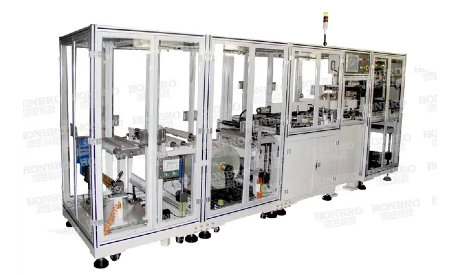
Precision Cutting Machines for Battery Electrodes
To achieve the desired level of precision, manufacturers rely on cutting-edge machines designed specifically for battery production. These machines use advanced technologies to ensure that electrode materials are cut to the exact specifications required.
Types of Cutting Machines Used in Battery Production
Cutting Machine Type | Description | Applications |
Laser Cutting | Uses a focused laser beam to cut the material with high precision, creating clean edges and minimal distortion. | Ideal for cutting thin foil materials, such as copper and aluminum foils. |
Rotary Cutting | Utilizes a rotating blade to cut through the electrode material with high speed and precision. | Suitable for high-volume production, commonly used for large-scale battery manufacturing. |
Shearing | Uses a sharp blade to cut the material, often used for larger and thicker electrode materials. | Used in applications where high-speed cutting is needed and in larger electrode sheets. |
Ultrasonic Cutting | Uses ultrasonic vibrations to cut the material without physical contact, ensuring minimal stress on the material. | Typically used for delicate or composite materials. |
Each cutting technique has its advantages depending on the material, production scale, and precision requirements. For high-quality battery electrodes, laser cutting and rotary cutting are the most commonly used methods, as they offer high precision and efficiency.
Challenges in Precision Cutting of Battery Electrodes
While precision cutting is vital, achieving consistent results can be challenging. Some of the common challenges faced during the cutting process include:
1. Material Variability
Electrode materials, such as copper and aluminum, vary in thickness, texture, and other physical properties. These variations can affect how the material reacts during the cutting process, leading to issues such as burr formation, curling, or surface deformation.
2. Temperature Control
Excessive heat generated during cutting, especially when using high-speed methods like rotary cutting or laser cutting, can cause the material to warp or lose its integrity. Cooling systems and precise temperature control are crucial to avoid this issue.
3. Cutting Speed
While faster cutting speeds can increase production rates, they can also compromise the quality of the cut. It's essential to balance cutting speed with precision to avoid compromising the final product's quality.
4. Tool Wear
Over time, the tools used in precision cutting can become dull or worn, affecting the consistency of the cuts. Regular maintenance and replacement of cutting tools are necessary to ensure high-quality slitting.
The Impact of Precision Cutting on Battery Performance
It’s clear that precision slitting plays a crucial role in battery performance, but how does it specifically affect the end results? Here’s how precision cutting influences various aspects of battery performance:
1. Improved Ion Diffusion
When electrodes are cut precisely, the electrode material can interact more effectively with the electrolyte, allowing for more efficient ion diffusion during charging and discharging. This leads to:
2. Reduced Internal Resistance
Uneven cuts can result in high internal resistance, which can hinder the flow of current and degrade battery performance. Precision slitting helps minimize this resistance, leading to:
3. Enhanced Battery Safety
Accurate slitting ensures that there are no sharp edges or irregularities in the electrodes, reducing the risk of short circuits or overheating. This is crucial for maintaining battery safety, especially in high-energy applications like electric vehicles (EVs).
Conclusion
Precision slitting is a crucial process in battery electrode production, ensuring that electrodes are cut to the correct dimensions and meet the performance requirements for high-efficiency batteries. The accuracy of the cut impacts the energy density, cycle life, charging speed, and overall performance of the battery. By investing in high-precision slitting machines and techniques, manufacturers can improve the quality, efficiency, and safety of their batteries.
At HONBRO, we provide state-of-the-art slitting solutions for the battery industry, ensuring that your electrodes are cut with the highest level of precision. Our cutting-edge technology guarantees optimal battery performance and manufacturing efficiency. Contact us today to learn more about how we can help enhance your battery production processes.
FAQ
Q: Why is precision cutting so important in battery production?
A: Precision cutting ensures uniform energy distribution, reduces internal resistance, improves battery lifespan, and ensures safety by preventing defects.
Q: What cutting methods are commonly used in battery production?
A: Common methods include laser cutting, rotary cutting, shearing, and ultrasonic cutting, each chosen based on the material and production requirements.
Q: How does poor cutting affect battery performance?
A: Inaccurate cuts can lead to uneven ion diffusion, increased internal resistance, and capacity loss, reducing battery efficiency and lifespan.
Q: What role does temperature control play in precision cutting?
A: Proper temperature control ensures that the material doesn’t warp or degrade due to excessive heat, which is critical in maintaining precision and quality.


